Best Non Gamstop CasinosUK Gambling Sites Not On GamstopUK Casinos Not On GamstopNon Gamstop CasinosCasinos Not On Gamstop

Rainbow Bar
How can the
Roman Catholic Church
claim to be
the one, true, holy,
universal church?
Rainbow Bar

        The Roman Catholic Church claims that -- unlike all of the other Christian churches, which are fraudulent and have nothing genuine to offer - "the Holy Catholic Church" is the one and only genuine, holy church in the whole world, the only one that Jesus intends this world to have, the only one that stands with an unbroken succession on the foundation laid by Jesus Christ in God's Word, the only one with a legitimate priesthood that can administer the "sacraments", i.e. the sacred instruments which Jesus provided in order to enable people to become part of his one true church and only route to eternal salvation.  Let's take a look, shall we, at what Jesus actually said, and at what the Catholic Church has done about Jesus' teaching.

THIS  is what

Jesus ChristHimself

taught :

THIS  is what

  his   a Pope "Vicars"

have   taught :

{According to Matthew 16: 17-19 }
        "God has blessed you, Simon, son of Jonah," Jesus said, "for my Father in heaven has personally revealed this to you--this is not from any human source. You are Peter, a stone; and upon this rock I will build my church; and all the powers of hell shall not prevail against it. And I will give you the keys of the Kingdom of Heaven; whatever doors you lock on earth shall be locked in heaven; and whatever doors you open on earth shall be open in heaven!"
        That sounds very impressive, doesn't it?  But Catholics all seem to be following instructions by their priests or nuns to slam their bibles shut after reading those three verses, so as not to see anything else that Jesus said (unless it has been screened by the hierarchy).  How many Catholics have read the very next verses (which are recorded in two Gospels, while the former, supposedly all important ones are only reported in one of the four Gospels) :

{According to Matthew 16: 20-23 )

        Then he warned the disciples against telling others that he was the Messiah.  From then on Jesus began to speak plainly to his disciples about going to Jerusalem, and what would happen to him there -- that he would suffer at the hands of the Jewish leaders, that he would be killed, and that three days later he would be raised to life again.  But Peter took him aside to remonstrate with him.  "Heaven forbid, sir," he said.  "This is not going to happen to you!"  Jesus turned on Peter and said,  "Get behind me, Satan.  You are an obstacle in my path, for the way you think is not God's way but man's."

        How can anyone imagine that Jesus planned to make a man whom he considered unfit enough to be called "Satan", and all of his successors -- many of whom he knew would be infinitely worse than Peter -- the guides of every generation of his followers that would come after him?

        {According to Matthew, Ch. 23:}
        "At that time, Jesus addressed the crowds and His disciples, saying : 'The scribes and the Pharisees speak with the authority of Moses, so you must do what they tell you and follow their instructions.  But don't make the mistake of imitating their lives!  For, they preach but do not practice.  They pile up back-breaking burdens and lay them on other men's shoulders -- yet they themselves will not so much as raise a finger to move them.  Their whole lives are planned with an eye to effect.  They increase the size of their prayer books and lengthen the tassels of their robes; they love seats of honor at public functions and front places and to have men call them 'rabbi' or 'teacher'.  As for yourselves, don't you ever be called 'rabbi'  -- you only have one teacher, and all of you are brother of one another.  And don't call any human being 'father'  -- for you have one Father, and he is in heaven.  And you must not let people call you 'leaders'  -- for you have only one leader, the Anointed One (Christ).  The only 'superior' among you is the one who serves the others.  For, every man who promotes himself will be humbled, and every man who learns to be humble will find promotion.
        But alas for you, you scribes and Pharisees, play actors (hypocrites) that you are!  You lock the doors of the kingdom of Heaven in men's faces.  You will not go inside yourselves, and neither will you allow others to enter."
"You know that among the pagans, rulers lord it over their subjects and their great men make their authority felt.  This is not to happen among you.  No, anyone who wants to be great among you must be your servant, and anyone who wants to be first among you must be your slave, just as the son of man came, not to be served but to serve, and to give his life as a ransom for many."

{According to Mark 10:17- 18 }
        "As he was setting out on a journey, a man ran up and knelt before him, and asked him, "Good Teacher, what must I do to inherit eternal life?"  Jesus said to him, "Why do you call me good? No one is good but God alone."

{According to Matthew 20)
        " If anyone wishes to be first, he must make himself the last, and the servant of the rest."

{According to John 13: 3--17 }
        Jesus . . . got up from the table, took off his outer robe, and tied a towel around himself.  Then he poured water into a basin and began to wash the disciples' feet and to wipe them with the towel that was tied around him. . .
        After he had washed their feet, had put on his robe, and had returned to the table, he said to them, "Do you know what I have done to you?  You call me Teacher and Lord--and you are right, for that is what I am.  So if I, your Lord and Teacher, have washed your feet, you also ought to wash one another's feet.  For I have set you an example, that you also should do as I have done to you.  Very truly, I tell you, servants are not greater than their master, nor are messengers greater than the one who sent them.  If you know these things, you are blessed if you do them."

        Those who were instructed to be humble servants have tortured and executed as "heretics" those who over the centuries objected to their demanding that those who wanted to follow Christ call them "Supreme Pontiffs", "Holy Fathers", and "Vicars of Christ", who can't be wrong when teaching "ex cathedra", and who have governed the church throughout the world like emperors from their throne in their imperial "Vatican City".  From this imperial court they rule with an iron hand through their the "Roman Curia", which has codified the church's rules and regulations ("Canon Law"), and functions as the church's "Supreme Court", under the "Supreme Pontiff".

        For centuries, the people of the various local communities, or "dioceses" elected their own leaders, or "bishops".  But the Bishop of Rome has since iradicated just about every trace of democracy from the church and personally chooses the man to rule every diocese in the world and every last one of them is answerable to no man, but one.


"All power tends to corrupt;
absolute power corrupts absolutely."

Lord Acton, in a letter
to Bishop Mandell Creighton, 1887

Pope Gregory VII (1073-85) :
"The pope cannot make a mistake."

Paschal II: (1099-1118)
"Whoever does not agree
with the Apostolic See
is without doubt a heretic."

Pope Innocent IV (1243-54):
described himself as
"the bodily presence of Christ."

( presumably by a kind of
transubstantiation at his election)

Pope Boniface VIII (1294-1303) :
"Every human being must do
as the pope tells him."

Pope Leo XIII (1878-1903):
"We hold upon this earth
the place of God Almighty."

( Encyclical Letter, June 20, 1894 )

More examples of authoritianism in defiance of Jesus' teaching and example:
  • Pope Paul III creates the Inquisition, the first Roman Congregation of what is now the Vatican Curia - 1542.
  • The Council of Trent declares "Tradition" (the teaching of the "fathers", popes and councils) equal in authority with the bible - 1545.
  • The Council of Trent adds the apocryphal books to the bible - 1546.
  • Pope Gregory XVI condemns "freedom of conscience" as "a mad opinion" -1831-46 a.d.
  • The First Vatican Council ratifies, as the truth of God, Pope Pius X's "Syllabus of Errors" (which condemned and repudiated : freedom of religion, speech, press, and all scientific discoveries that have not been approved by the church) - 1864.
  • The temporal authority of the pope over all rulers is officially reaffirmed - 1864.
  • The First Vatican Council proclaims the absolute infallibility of the pope in all matters of a faith and morals - 1869-70.
  •         Although the Catholic Church claims to base its claims on Jesus, how many Catholics know that only one of the four Gospels even mentions the word "church" and all of the instances fit on a single page of Matthew's Gospel, i.e. verses 18 in Ch. 16, and verses 15,17 & 21 n Ch. 18.  Jesus never used the word "priest" or "priesthood" to refer to anything other than the Jewish priesthood.
            The Roman Catholic Church is governed like a dictatorship, from an imperial court called the "Roman Curia",  which functions as the executive, legislative and judicial branches all rolled into one.  It's the Curia which codified the church's rules and regulations ("Canon Law") and enforces them. It's the Curia which functions as the church's "Supreme Court", under the "Supreme Pontiff".  A retinue of "Princes of the Church", all appointed by the Pope govern sections of the church called "dioceses" under his (and the Curia's) direction.  ( according to the book, Vicars of Christ p. 143), upon their consecration, all Catholic bishops take an oath -- not to serve the Church as a whole, or its people -- but to "maintain, defend, increase and advance the rights, honors, privileges and authority of their Lord the Pope." 


            The principal tools the Catholic Church has used to lead its members has been the "Mass", mandatory on Sundays for all the faithful and optional on weekdays for its more pious members, and Catholic education, in the form of full time Catholic schools where possible or extra-curricular Catholic education for youth unable to attend such schools.
            Unfortunately, while the Mass was bible-based, it was celebrated for centuries in Latin, a dead language, and during most of those centuries the Catholic Church discouraged the reading of the scriptures, which it considered dangerous.

            While "heretics" were saying things like :
  • 'The reading of the Holy Scriptures is for all men.' &
  • 'Christians are to sanctify the Lord's Day with reading godly books, more particularly the Holy Scriptures.' &
  • 'To pull the New Testament out of the hands of Christians is to shut the mouth of Christ against them.' &
  • 'To forbid Christians the reading of the Holy Scripture and especially the Gospel is to forbid the use of the Light by the children of Light and to punish them with a kind of excommunication.'

            Pope Clement XI was condemning all of these as "Jansenist heresies" in 1713 :
            "We declare, condemn and disallow all and each of these propositions as false, captious, ill-sounding, offensive to pious ears, scandalous, pernicious, rash, injurious to the Church and its practices, not only outrageous against the Church but even against the secular powers, seditious, impious, blasphemous, suspected of heresy and savouring of heresy itself, as also encouraging heretics and heresies and even schism, erroneous, often condemned, and lastly also heretical, containing divers heresies manifestly tending to innovation".  ( p. 232)

     
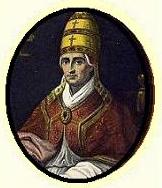
    Since this "Supreme Pontiff"
    was carried around
    in this carriage,
    he was obviously
    Jesus Christ's
    authentic representative !

  •         for (according to Matthew and Luke) Jesus said to him, "Foxes have holes, and birds of the air have nests; but the Son of Man has nowhere to lay his head."
            Since John the Baptist explained that in order to be saved, "Whoever has two coats must share with anyone who has none; and whoever has food must do likewise" (Luke 3:11), Jesus Christ's self-proclaimed "vicars" have built themselves a humble abode of 11,000 (as in "thousand") rooms, which they no doubt share with the homeless of the world.  See ShameOnCatholics.Org/VaticanPalace.html.


            For an eloquent Catholic layman's view of today's U.S. Catholic Church, see The Church That Forgot Christ, by the famous writer, Jimmy Breslin .

            While some of what Catholics have been taught in their schools and from their pulpits has had to do with the Bible, a good deal of it had to do with unique inventions of the Catholic Church, "traditions" as they call them, which have little if any connection with the teaching of Jesus Christ contained in the Gospels.  Sadly, when the church spoke of Christ and the Bible, through most of the past centuries, it tended to speak in Latin, a dead language which few priests, let alone lay people, really understood.  But when it spoke of its own dubious Roman inventions, it always spoke in the vernacular.  Far from telling people these doctrines were their own inventions, popes have often insisted that as "Vicars of Christ", what they taught came somehow from Jesus Christ :

    1. First mention of infant baptism - 215 a.d.
    2. Prayers for the dead - about 300 a.d.
    3. Making the sign of the cross 300 a.d.
    4. Wax Candles - 320 a.d.
    5. Emperor Constantine converted (more or less) - 312 a.d.
    6. Constantine declared Sunday a civil holiday (Holy Day) - 321 a.d.
    7. Council of Nicea adopts "Creed" and recognizes episcopacy.
    8. Veneration of angels and dead saints - 375 a.d.
    9. The use of images - 375 a.d.
    10. The Mass as a daily celebration - 394 a.d
    11. Council of Carthage: canonization of Scripture - 394 a.d.
    12. Latin Vulgate Bible by Jerome - 405 a.d.
    13. Edict of Innocent I: Compulsory infant baptism - 407 a.d.
    14. The beginning of the exaltation of Mary.  The title "Mother of God" originated with the Council of Ephesus - 431 a.d.
    15. Priests begin to dress differently than laymen. - 500 a.d.
    16. Extreme unction - 526 a.d.
    17. First monastic order begun by Benedict of Nursia - 529 a.d.
    18. The doctrine of purgatory is established by Gregory I. - 593 a.d.
    19. Latin language use in prayer and worship made official - 600 a.d.
    20. Prayers directed to Mary, dead saints and to angels - 600 a.d.
    21. Pope Gregory the Great declares that all sexual desire not directed to procreation is sinful.
    22. Title of "Pope" (Bishop of the universe) given to Boniface III by the Emperor Phocas - 607 a.d.
    23. Pope Honorius declared a heretic by Third Council of Constantinople - 680 a.d.
    24. Kissing the pope's foot begins with Pope Constantine - 709 a.d.
    25. Temporal power of the popes is conferred by Pepin, King of the Franks - 750 a.d.
    26. Worship of the cross, images and relics is now officially authorized - 786 a.d.
    27. Holy Water (mixed with a pinch of salt and blessed by a priest) comes into use. - 850 a.d
    28. The worship of Joseph as a saint - 890 a.d.
    29. College of Cardinals established (for election of popes) - 927 a.d.
    30. Baptism of bells instituted by Pope John XIII - 965 a.d.
    31. The canonization of dead saints is first done by Pope John XV - 995 a.d.
    32. Fasting on Fridays and during "Lent" begins - 998 a.d.
    33. The mass has gradually developed into a sacrifice and attendance is now obligatory - 1050.
    34. The celibacy of the priesthood is required by Pope Gregory II - 1079.
    35. The rosary, a mechanical praying with beads, invented by Peter the Hermit - 1090.
    36. The Inquisition, in operation for centuries, is now made official by Council of Verona - 1184.
    37. The sale of indulgences begins - 1190.
    38. Doctrine of transubstantiation is proclaimed by Pope Innocent III as the power to bring down God out of heaven into a cup and wafer - 1215.
    39. Auricular confession of sins to a priest is instituted by Pope Innocent III and required annually in the Lateran council. - 1215.
    40. The adoration of the wafer (host) is decreed by Pope Honorius III - 1220.
    41. Laymen are officially forbidden to have or read the Bible - by the Council of Valencia - 1229.
    42. Protection by a piece of cloth, the scapular is invented by Simon Stock, a British monk - 1251.
    43. Laymen are forbidden to drink the cup at communion, by order of the Council of Constance - 1414.
    44. Purgatory is proclaimed as a dogma by Council of Florence - 1439.
    45. Doctrine of seven sacraments is affirmed on pain of mortal sin - 1439.
      [ These SEVEN  key sacraments make the clergy crucial to every aspect of every Catholic's life.]
    46. The sale of indulgences (by Tetzel) begins in 1504.
    47. Rebuilding of St. Peter with money from indulgence business begins 1506.
    48. Cult of holy house of Loretto, transported from Holy Land by angels recognized by Pope Julius II -1507.
    49. The first part of the "Ave Maria" saying is made official - 1508.
    50. The last part of the "Ave Maria" has been prepared, and is required of the faithful by Pope Sixtus V - 1593.
    51. The Jesuit Order is founded by Ignatius Loyola;
      Luther publishes Bible &
      Calvin publishes his Institutes - 1534.
    52. Pope Paul III creates the Inquisition, the first Roman Congregation of what is now the Vatican Curia - 1542.
    53. The Council of Trent declares "Tradition" (the teaching of the "fathers", popes and councils) equal in authority with the bible - 1545.
    54. The Council of Trent adds the apocryphal books to the bible - 1546.
    55. Pope Paul IV initiates the "Index of Forbidden Books" - 1559..
    56. The creed of Pope Pius IV is imposed as the official creed of the church - 1560.
    57. Pope Gregory XVI condemns "freedom of conscience" as "a mad opinion" -1831-46 a.d.
    58. The Immaculate Conception of the Virgin Mary is proclaimed by Pope Pius IX - 1854.
    59. The First Vatican Council ratifies, as the truth of God, Pope Pius X's "Syllabus of Errors" (which condemned and repudiated : freedom of religion, speech, press, and all scientific discoveries that have not been approved by the church) - 1864.
    60. The temporal authority of the pope over all rulers is officially reaffirmed - 1864.
    61. The First Vatican Council proclaims the absolute infallibility of the pope in all matters of a faith and morals - 1869-70.
    62. Pope Pius X publishes the encyclical letters Lamentabili and Pascendi against "Modernism" (1907).
    63. "Public schools" (i. e. non-sectarian) are condemned by Pope Pius XI - 1930 (as opposed to church-run schools subsidized by the state, on the basis of taxes imposed on the public).
    64. Throughout World War II, while Hitler's government subsidized Catholic and Lutheran churches and schools, those church refused to speak out against the Jewish Holocaust.
    65. Pope Pius XII ( 1939-1958 )
    66. Pius XII signs "Concordat" with Hitler ( 1933 )
    67. When Eugenio Pacelli became Pope in 1939, rather than publish the Encyclical Letter,Humani Generis Unitas {The Unity of the Human Race} in which Pope Pius XI explicitly condemned the Holocaust, he buried it in the Vatican archives.
    68. Neither during Adolf Hitler's rise to power or any time since, is his book "Mein Kampf" ever put on the "Index of Forbidden Books".
    69. The Assumption of the Virgin Mary (bodily ascension into heaven shortly after her death) is proclaimed by Pope Pius XII - 1950.
    70. Pope John XXIII ( 1958-1963 )
    71. The Second Vatican Council 1962-1965
    72. Birth Control issue removed from the competence of the General Council of the Church by Pope Paul VI ( 1963-1978 )
    73. Mary is proclaimed to be "the Mother of God", by Pope Paul VI - 1965.
    74. The "Index of Forbidden Books" discontinued by Pope Paul VI - 1966.
    75. Pope John Paul II ( 1978-2003 )
    More Roman Catholic innovations,
    ( that have yet to be dated ):
      Worship not based on the Bible:
    • "Sacred Heart of Jesus"
    • "Christ the King"The Infant of Prague
    • The "Queenship" of Mary
    • Mary called "the Mother of God"
    • Mary "Mediatrix of all grace"
    • The "Immaculate Conception" of Mary
    • The "Assumption" (into Heaven) of Mary
    • The "Rosary"
    • The "Novena"
    • Shrines of all kinds
    • "Our Lady of Fatima"
    • "Our Lady of Lourdes"
    • The intersession of "Saints"
    • The "Canonization" of Saints
    • "Patron Saints" with power in specialized areas
    Beliefs not based on the Bible:
  • Crucial role of the Pope, and through him of all clergy
  • reserving the priesthood (and most positions of honor or power) for men only
  • the duties of wives to their husbands
  • pressuring non-Catholics to "convert" in order to marry Catholics
  • pressuring the non-Catholic parent to raise his or her children as marry Catholics
  • strict ban on marriage after divorce (except for those influential enough to get special treatment, such as "annulment")
  • requiring celibacy for priests
  • burial of Catholics in Catholics-only cemeteries
  • the cataloguing of Mortal vs. Venial Sins
    Identifying the following as "Mortal Sins":
    • masturbation
    • birth control
    • abortion
  • The Mantra of "Anti-Catholicism": What is Bigotry?
    by Rosemary Ruether [a Catholic theologian], Autumn 2000


            "It has become common among right-wing Catholics, such as the Catholic League for Religious and Civil Rights, to pillory various cultural phenomena in the United States -- ranging from movies such as Priest and Dogma -- to Catholics for a Free Choice as "anti-Catholic."  Significantly, this label is being used most frequently against liberal Catholics who hold views other than those of the Catholic League and other Catholic right organizations about what it means to be Catholic . . .
            American Catholics, since the Kennedy administration, have become fully integrated into American society.  They are generally treated respectfully by the dominant culture and media as a mainstream component part of American religious diversity, despite occasional exploitation of stereotypes of nuns.  There is no evidence of a rejuvenation of the old type of anti-Catholic bigotry in the United States, stemming from Protestant-Catholic conflicts of the Reformation. . .
            Rather, what is going on today is a new schism and conflict, stemming from the Second Vatican Council and new Catholic liberal thought, one that divides Catholics from each other.  The mantra of "anti-Catholicism" from the Catholic right is primarily a reflection of this internal Catholic conflict.  This term is being used by the Catholic right to claim that they and they alone are "authentic" Catholics, and Catholics that hold progressive views are not Catholics, are hostile to "authentic" Catholicism, and hence are "anti-Catholic."  Furthermore, non-Catholics in the larger society who listen respectfully to the views of progressive Catholics are therefore also "anti-Catholic."  In short, the charge of "anti-Catholicism" is being used as a scare tactic by the Catholic right in the service of repression of progressive Catholic views.
            It might be useful in this context to sort out the fundamental difference between critical thought and bigotry.  Bigotry, whether racial or religious, is a stereotyping of an entire other religious or racial group as essentially evil and demonic by nature.  It is not factual and by nature cannot be factually proven.  It sets up the other group as the antithesis of all that is good and godly, characteristics supposedly monopolized by the bigot's own group.  Catholics have practiced this kind of bigotry against Protestants, claiming that they are "heretics."  Both Catholics and Protestants have a long and evil history of using this kind of demonic language against Jews as a religious and ethnic group.
            Critical thought is the fundamental opposite of such bigotry.  Critical thought is based on nuanced judgments founded on historical reality.  There is a world of difference between saying the Pope is the anti-Christ and making historically factual statements about the papacy as an institution as having been corrupt at various times, having abused power and wealth and having been less than truthful about its own history.  Garry Wills new book, Papal Sin, is this kind of carefully documented critique of the papacy.  Garry Wills is a Catholic.  He makes his critique for the purpose of arousing critical thought among Catholics about these papal defects in the hope of promoting church reform.  It is an insider's critique made by an esteemed Catholic scholar whose purpose is the improvement of the Catholic community's fidelity to its authentic values of truth and justice.
            The name for such historically accurate critique of a community made from within for the purpose of calling it to reform is "prophetic" thought.  This kind of insider's critique is the core of the Biblical tradition.  The Hebrew prophets and Jesus called down stern critique of the leaders of their own community in order to recall them to their more authentic traditions.  Civil discourse in any culture depends on being able to distinguish bigotry aimed at stereotypical demonization of the "other" from historically accurate criticism made for the sake of reform and renewal of authentic values.
            The Catholic Right's misuse of the language of religious bigotry to repress progressive Catholics threatens both to cut the life line of renewal within Catholicism itself and to collapse the fundamental distinction between bigotry and critical thought that is at the heart of educated, civil society.  In the Catholic Right's book, Jesus and Jeremiah would be "anti-Catholic" if the kind of criticism that they made at the religious leaders of their time had been directed against Catholic leaders.  It is time for American cultural leaders to stop being intimidated by such language and start exercising critical public evaluation of the accuracy and context of the use of the term "anti-Catholic."

            [ Rosemary Radford Ruether is the Georgia Harkness professor of applied theology at Garrett-Evangelical Theological Seminary in Evanston, Illinois.  She is also on the board of Catholics for a Free Choice and is editorial advisor to Conscience. ]


            Conservative Catholics who complain of being "victims" of "anti-Catholic bigotry" remind me of this statement by their Conservative ally, Pat Robertson, who said in a 1993 interview with Molly Ivins:

            "Just like what Nazi Germany did to the Jews, so liberal America is now doing to the evangelical Christians.  It's no different.  It is the same thing.  It is happening all over again.  It is the Democratic Congress, the liberal-based media and the homosexuals who want to destroy the Christians.  Wholesale abuse and discrimination and the worst bigotry directed toward any group in America today.  More terrible than anything suffered by any minority in history."

    We've had our say.  Now it's your turn :
    email image
    [email protected]


    Click here to Print this Page  this page

    or here to to friends (or yourself).


    Pope John XXIII was not only
    a different kind of pope.
    We believe that he was, like us a

    Liberals Like Christ

    Click on the banner above to see
    why you may want to be one too!

    Web discoveries